
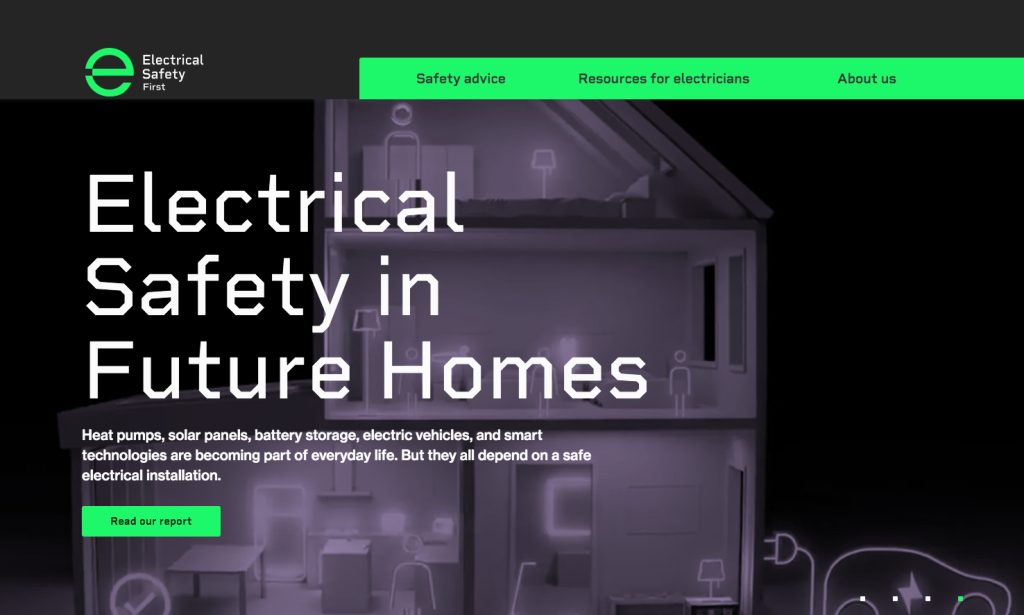
Electrical Safety First recently launched a brand new website design, creating a ‘one-stop shop’ for electrical safety information, advice and resources.
Here, the charity tells IER how the new platform brings together trusted electrical safety information, practical tools, expert guidance and industry resources in a single destination for consumers, electricians and stakeholders across the sector.
Among the new features is an upgraded Find an Electrician Tool, which incorporates live data feeds from five recognised electrical industry certification bodies, including the NICEIC, MCS, Flexi-Orb, SELECT and Blue Flame Certification, helping consumers find a local registered, competent electricians with confidence.
The site also introduces an interactive Units Calculator, enabling users to better understand electrical consumption and energy use through a simple, easy-to-use tool.
For professionals, a new Resources for Electricians section provides an extensive library of free technical guidance and training materials developed in collaboration with more than 15 leading industry organisations.
The resource hub includes Best Practice Guides covering a wide range of electrical installation topics, guidance produced by the Wiring Regulations Advisory Group, the Amendment 4 Pocket Guide access to the comprehensive Apprentice Channel of Excellence platform of training videos.
The website has also been designed with accessibility at its heart. An integrated accessibility toolbar enables users to customise their browsing experience, whilst a translation tool helps make vital electrical safety information available to a wider audience.
The new website was shaped by two rounds of user testing involving 28 participants, including members of the public, electricians and accessibility testers. Feedback helped inform the site’s structure, design, navigation and content, ensuring vital electrical safety information and resources are easy to find, understand and access for all users.
Rory Carroll, Communications Director at Electrical Safety First, said: “The new website represents a significant step forward in our mission to improve electrical safety across the UK. Whether you’re a consumer looking for trusted safety advice, a landlord seeking guidance on your responsibilities, or an electrician searching for technical resources and best practice guidance, the new platform provides easy access to the information and tools you need.
“By bringing together expert advice, practical resources and industry-leading guidance in one place, this website is the UK’s go-to destination for electrical safety information.”

Plug-in solar panels
Responding to the roll-out of plug-in solar panels, Luke Osborne, Technical Director at Electrical Safety First, said: “Plug-in solar panels send electricity in the opposite direction in your property’s wiring. Whilst many modern homes may be able to enjoy this technology safely, we still have concerns plug-in solar panels may damage older devices in people’s homes which protect people from electric shock, known as RCDs.
“Because of this, it is our view that not every home will currently be suitable for plug-in solar. We urge households to ensure they have an RCD suitable for this technology and to consult a competent electrician if they are unsure if they have the right protections in place in their home.”
The charity’s five points on households reducing their risk are:
- Not every home is currently suitable for plug-in solar: Given unresolved concerns about the potential impact of plug-in solar panels on certain RCDs, we recommend households have at least a Type A bidirectional RCD protecting circuits intended for use with plug-in solar panels. Until these concerns are addressed, homes with Type AC RCDs should not use plug-in solar systems without first upgrading to a minimum Type A bidirectional RCD on those circuits.
- Have your electrics checked before you buy: Don’t assume ‘plug-in’ means it’s suitable for every home. Electrical Safety First recommends that households have their electrical installation assessed by a competent electrician registered with a competent persons scheme before purchasing or using a plug-in solar system, particularly in older properties or where the condition of the electrical installation and type of protective devices is unknown.
- Never connect plug-in solar through extension leads or adapters: Plug-in solar systems should not be connected via extension leads, cable reels, multiway adaptors, travel adaptors or plug-in RCD adaptors. These accessories can overheat, become overloaded and create additional safety risks.
- Buy from reputable retailers and avoid third-party sellers via online marketplaces: Given the size of these devices, it is likely many shoppers will seek to purchase them online. We urge shoppers to stick to reputable high street retailers and their online websites to ensure the device they are buying is safe and meets the new interim product specification. We advise households to avoid buying these devices from third-party sellers on online marketplaces, no matter how appealing this may be, as these platforms are currently not legally responsible for the safety of goods sold via their sites, exposing people to substandard versions that may put you and your home at risk.
- One home, one device: Only one plug-in solar panel system is permitted per household. Installing multiple units could reduce the effectiveness of protective devices.

